
Independence gets talked about a lot in disability support. It’s in NDIS plan goals, on provider websites, in government policy documents. But the version of independence that gets promoted isn’t always the one that matters most. Too often, independence is framed as doing everything yourself — as though needing help is a failure.
Authentic independence isn’t about doing everything yourself. It’s about having the freedom to make your own choices, live your life on your own terms, and access the support you need to make that happen. This post explores what that looks like in real life, right here in Central West NSW.
Redefining Independence
There’s a myth that independence means not needing help. That’s not true for anyone — and it’s certainly not the standard we should be holding NDIS participants to. Everyone relies on other people, systems, and services to live their lives. Independence isn’t the absence of support; it’s the presence of choice.
Authentic independence means:
- Making your own decisions. Choosing what to eat, when to go out, who to spend time with, and how your day unfolds. Even when you need support to carry out those choices, the choice itself belongs to you. Your support worker helps you do what you’ve decided — they don’t decide for you.
- Having the right support at the right time. Good disability support doesn’t create dependence. It provides a scaffold that helps you do more — and then steps back when you’re ready. The aim is always to build confidence and capability, not to make yourself indispensable.
- Feeling at home in your life. Independence is personal. For one person, it might mean living alone for the first time. For another, it’s managing their own budget, or travelling to the shops without a support worker, or cooking dinner for their family. It’s whatever makes you feel like your life is genuinely yours.
- Taking risks. Independence includes the right to try things that might not work. To make choices that other people might not agree with. To learn from experience, just like everyone else. Good support workers understand that risk is part of living.
Stories of Independence from Our Community
The following stories are composites based on real experiences. Names and details have been changed to protect privacy.
Sarah’s Morning Routine
Sarah lives in Orange and receives personal care support three mornings a week. When she first started with SpiritAbility, her support worker helped with nearly every step of her morning routine — showering, dressing, breakfast, medication prompting. Sarah found the level of assistance frustrating. She wanted to do more herself but didn’t have the systems in place to make it work.
Over twelve months, Sarah and her worker built a system together: visual prompts on the bathroom mirror, a clothing layout prepared the night before, and a breakfast prep station that Sarah manages herself. They broke the morning into steps and worked through them one at a time, with Sarah taking over each step as she felt ready.
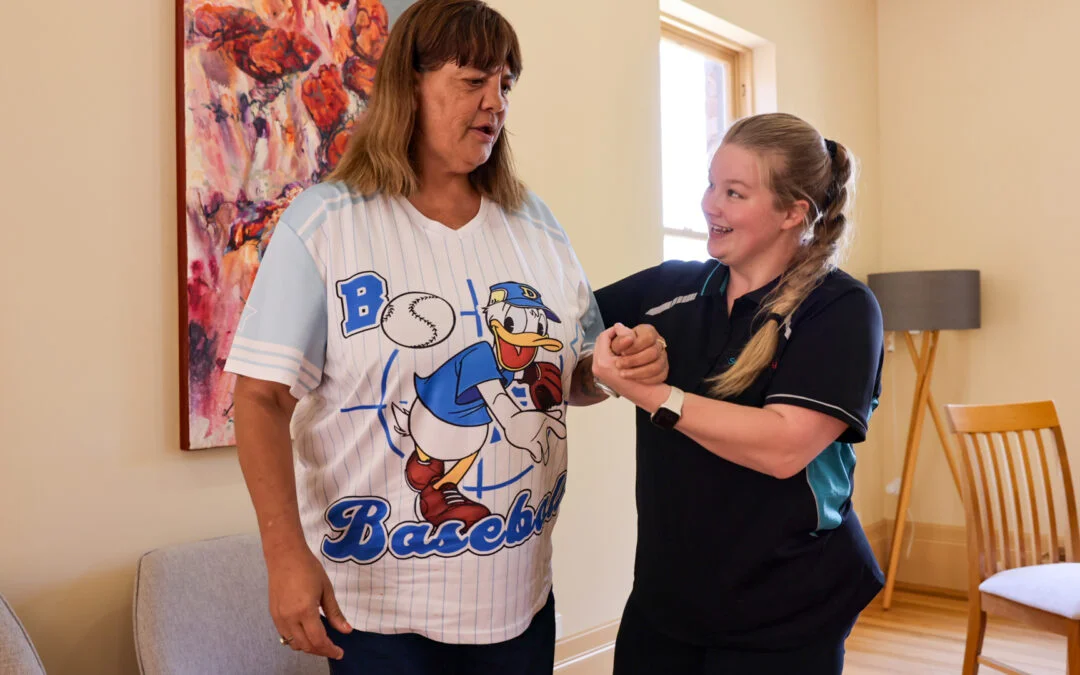
Today, Sarah’s support worker arrives later, checks in, and helps with the parts Sarah still needs. The rest? Sarah’s got it. That’s authentic independence — not the removal of support, but the evolution of it. Sarah still has a support worker, but the relationship has shifted from doing things for her to doing things alongside her.
James’s Social Life
James is 24 and lives in Bathurst. He’s autistic and passionate about gaming, music, and trains. For years, his social activities were chosen by other people — group programs that didn’t match his interests, outings he didn’t enjoy, activities designed for a generic idea of what young people with disability should like.
When James started with SpiritAbility, his support worker took the time to learn what he actually liked. Not what his previous provider assumed, but what genuinely lit him up. Together, they found a local gaming group that meets weekly, started visiting the railway museum regularly, and built a social routine around James’s genuine interests.
James now chooses what he does and who he does it with. He’s made friends at the gaming group — real friends, not just other participants thrown together in a room. His confidence has grown because he’s engaging with activities he actually cares about. That’s independence.
Maria’s Voice
Maria is a participant in Cowra whose first language isn’t English. For a long time, she felt like decisions about her support were made around her rather than with her. She didn’t always understand the paperwork, and she didn’t feel confident speaking up in meetings with coordinators and planners. Important conversations happened in a language she could follow but couldn’t fully participate in.
SpiritAbility matched Maria with a support worker who speaks her language and understands her cultural background. With that bridge in place, Maria now leads her own plan reviews, tells her team what she needs, and feels genuinely in control of her support. She makes decisions with confidence because she understands what’s being discussed and can express what she wants.
Language and cultural safety aren’t extras — they’re foundations of independence. Without them, even the best-intentioned support can leave someone feeling voiceless.
Maria’s experience highlights something important about how independence is measured. For too long, the system has used a narrow definition — one that doesn’t account for the barriers that language, culture, and systemic exclusion create. True independence means removing those barriers, not expecting participants to overcome them on their own. When a provider invests in cultural competency and language access, they’re not offering a bonus feature — they’re providing a fundamental requirement for meaningful participation.
Neurodiversity and Authentic Independence
October is ADHD Awareness Month and falls within broader Neurodiversity Awareness. For neurodivergent participants, authentic independence often means support that works with their brain, not against it.
That might mean flexible scheduling instead of rigid routines that don’t account for how energy levels fluctuate. Sensory-friendly environments rather than overstimulating group settings. Communication styles that match their preferences — visual prompts for some, verbal reminders for others, written instructions for others again. Support workers who understand that independence looks different for everyone and who don’t impose a neurotypical template on a neurodivergent life.
At SpiritAbility, we don’t force a single model of independence on anyone. We work with each participant to figure out what independence means for them, and then we build the support around that definition — not ours, theirs.
For autistic participants, authentic independence might also mean having the space to pursue deep interests without being redirected toward activities someone else considers more “normal.” It might mean living in an environment tailored to sensory needs, or having support workers who understand the difference between a shutdown and non-compliance. Independence for neurodivergent people is not about conforming to neurotypical expectations — it’s about having the support and freedom to live authentically.
At SpiritAbility, we’re learning and growing in this area all the time. We seek feedback from neurodivergent participants and advocates, invest in neurodiversity training for our team, and challenge assumptions about what “good” outcomes look like. Independence isn’t one thing. It’s as varied and individual as the people we support.
Your Independence, Your Way
If you’re an NDIS participant in Central West NSW looking for support that builds toward real independence — the kind defined by you, not by a template — we’d love to hear from you. Whether you’re just starting out or you’re ready for a provider that does things differently, SpiritAbility is here.
Contact SpiritAbility today to talk about what authentic independence could look like for you.